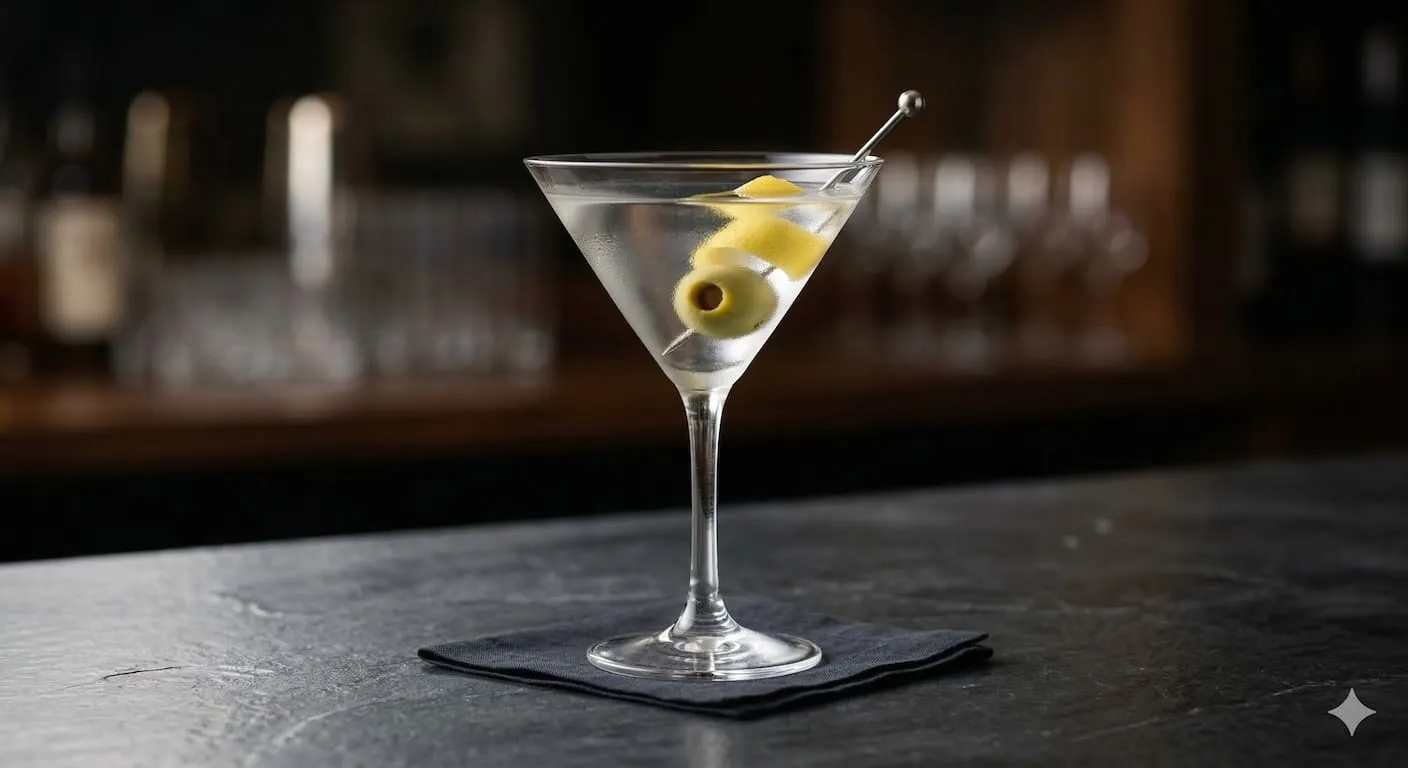
Dry Martini
The king of cocktails, a precise blend of gin and dry vermouth.
Ingredients
| 60 ml | Gin | |
| 10 ml | Dry Vermouth | |
| Garnish | ||
| 1 peel | Lemon peel | |
| 1 garnish | Olive | |
Got these ingredients?
Add them to your bar and discover more cocktails you can make.
Instructions
- 1
Pour all ingredients into a mixing glass with ice cubes.
- 2
Stir well.
- 3
Strain into a chilled martini glass.
- 4
Squeeze oil from a lemon peel onto the drink, or garnish with an olive.
Flavour Profile
Collections
Nutrition
160 kcal
1 g
0 g
Dry Martini
The Dry Martini is the “King of Cocktails” and a “The Unforgettable” classic composed of Gin and Dry Vermouth. It is the absolute pinnacle of minimalist mixology, representing a sophisticated balance of botanical spirits, chilled to a near-freezing temperature and served with clinical precision.
Key Takeaways
- Alcoholic Base: London Dry Gin.
- Modifier: Dry White Vermouth.
- ABV: High (approximately 30-35% depending on dilution).
- Core Principle: Chilling and Dilution are as important as the ingredients.
History: From Martinez to Minimalist
The Martini’s origin is a subject of intense debate, likely evolving from the sweeter Martinez cocktail of the 1880s.
The “Dry” Revolution
As taste preferences shifted away from sweet liqueurs and toward dry gin in the early 20th century, the ratio of vermouth steadily decreased. By the 1950s, the “Extra Dry” Martini—sometimes involving just a whisper of vermouth—became a symbol of elite mid-century American culture.
The Glassware Icon
The V-shaped Martini Glass is now the universal symbol of cocktail culture itself. Its wide rim is designed to maximize the aromatic experience of the gin’s botanicals.
Ingredient breakdown
The Gin: The Diamond Core
The Martini is essentially a stage for the gin. Use a high-proof London Dry Gin (e.g., Tanqueray, Beefeater, or Plymouth). The high alcohol content is necessary to ensure the drink doesn’t become “flabby” as it warms.
Dry Vermouth: The Velvet Glove
A quality Dry French Vermouth (like Noilly Prat or Dolin) acts as the bridge. Even in a “Dry” Martini, the vermouth provides essential floral notes and wine-based acidity that “rounds off” the sharp edges of the gin.
Preparation and The “Vesper” Debate
- Stirring (The Professional Standard): A Martini should be stirred, not shaken. Stirring with large, cold ice cubes for 30-40 seconds ensures a crystal-clear appearance and a heavy, silky texture.
- James Bond Note: Shaking (the Vesper style) aerates the wine and “bruises” the gin, resulting in a cloudy drink with more water dilution.
- Temperature Objective: A Martini must be served as close to frozen as possible. Chilling the glass in a freezer is mandatory.
- The Garnish Strategy:
- Lemon Twist: For a bright, citrusy nose. This is the “clean” choice.
- Olive: For a savory, salty undertone. Always use high-quality, unpitted green olives if possible.
Ratios and Definitions
- Classic Martini: 2:1 or 3:1 ratio of Gin to Vermouth.
- Dry Martini: 5:1 or 6:1 ratio.
- Extra Dry: Just a rinse of vermouth in the glass, then discarded.
- Gibson: A Dry Martini garnished with a pickled cocktail onion.
Tasting Profile
The Dry Martini is a clean, bracing experience. It leads with a powerful botanical punch of juniper and citrus, followed by the subtle herbal complexity of the vermouth. The finish is sharp, medicinal, and incredibly dry, leaving the palate refreshed and ready for food.
You Might Also Like
More Gin cocktails to try.

Hanky Panky
A complex, herbal variation of the Martinez, created by Ada Coleman.

Negroni
A perfect balance of gin, vermouth, and bitters, served on the rocks.

Vesper
James Bond's original martini, a powerful blend of gin, vodka, and Lillet Blanc.

Casino
A crisp, tart cocktail featuring gin, maraschino, and orange bitters.

Boulevardier
A sophisticated, bitter-sweet classic described as a Negroni made with whiskey.

Bronx
A bright, classic variation of the Perfect Martini that incorporates fresh orange juice for a citrus-forward profile.